From rock to jar — how we actually purify Shilajit

Raw Shilajit — the thing our harvesters carry down from above sixteen thousand feet — is not something anyone should be eating. It comes off the mountain in wicker baskets mixed with rock fragments, plant matter, mineral dust, and the ordinary grime of a place people walked through for a hundred years. Between that basket and your spoon, four things have to happen. Here is what those four things are in ours.
Step one — sorting
Before anything else, the baskets get hand-sorted at our facility in Leh. Not all of what comes down is usable. The classical texts distinguish four grades of Shilajit — Suvarna (gold), Rajata (silver), Tamra (copper), and Lauha (iron). We only work with the gold grade, which in practice means the darkest, glossiest, most resinous chunks in the basket. Anything grey, brittle, or crusted with mineral goes back into the raw pile — it isn't worthless, but it isn't going into our jars either.
Any batch that fails this first visual sort never enters the process. This is the cheapest step in the whole thing, and it is the one most brands quietly skip.
Step two — dissolving in glacial water
The gold-grade resin gets broken down into small pieces and dissolved slowly in cold water drawn from local Ladakh streams. Not tap water, not municipal supply — glacial melt from the same catchment area as the resin itself. Something about that matters, in a way I can't fully explain in chemistry but our people have known since before there was chemistry to explain it with.
Pure resin goes into solution readily. Rock particles, sand, and mineral crust do not — they sink. Vegetable matter and lighter debris float. What you are left with is a dark, honey-thick liquid with a thin sediment at the bottom and a fine film on top. Neither of those goes into the next round.
Step three — filtering, over and over
The dissolution gets filtered, the resin re-dissolved in fresh water, filtered again, and so on. Eight to ten rounds in total. Every round pulls a little more of the fine impurities out. Every round leaves the liquid a little cleaner.
There are faster ways to do this — centrifuges, pressure filters, solvent extraction. Each of them works, and each of them either introduces chemicals we then have to remove or damages the fulvic acid the whole exercise was for. We do it the old way. Water, patience, and repetition.
Step four — drying, slowly
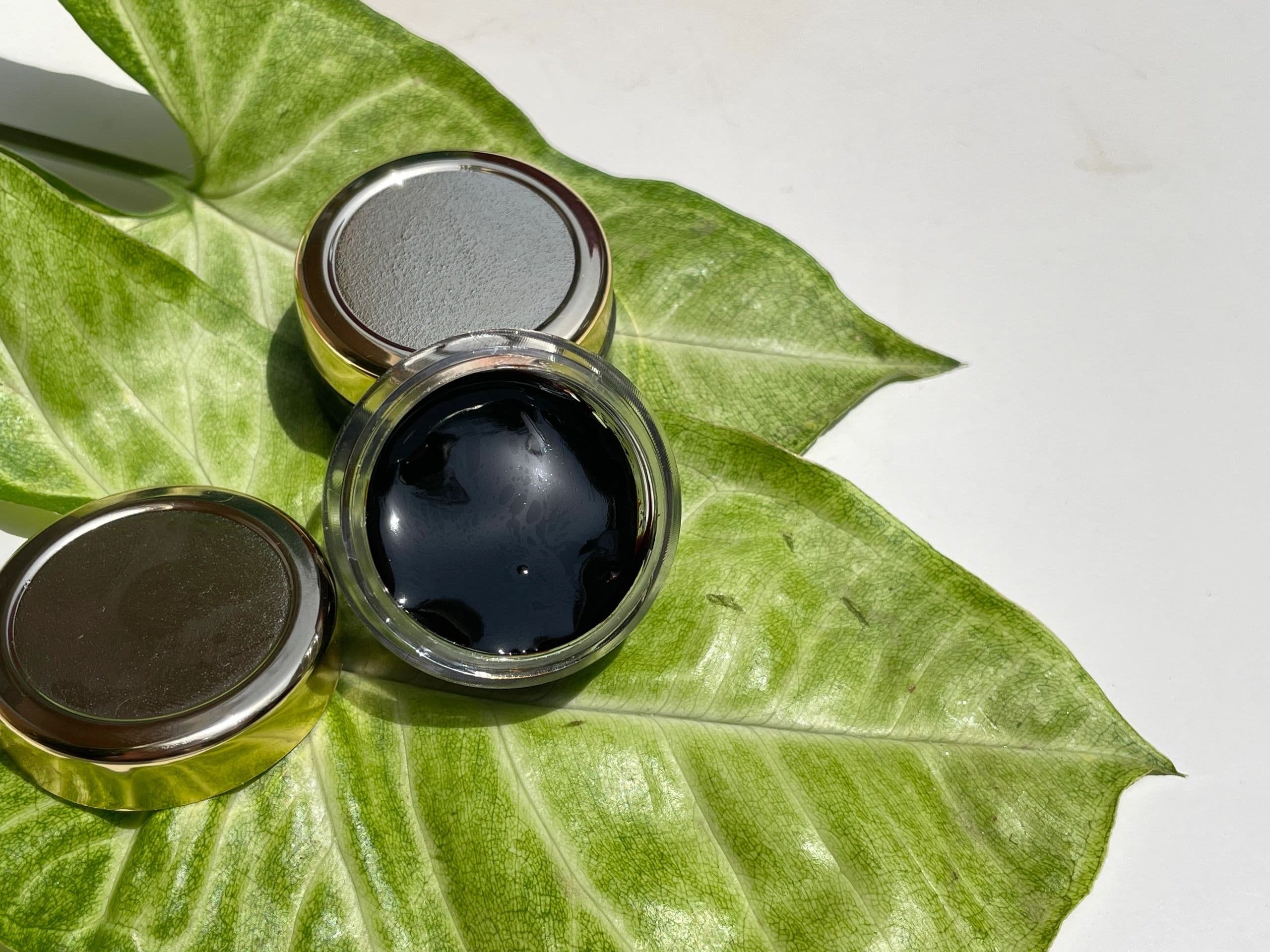
The filtered liquid is clean now, but too thin. You cannot spoon a solution. It has to come back to resin form — thick, dark, glossy, spoonable.
We do this at low temperature, slowly. The traditional method used the sun, and some purifiers still do. At lower altitudes and on the plains, though, sun exposure gets aggressive enough to damage the fulvic acid content. Low-heat drying keeps things predictable, batch after batch.
Slow drying is not something you can shortcut without it showing up in the numbers later.
The last thing, which isn't really us
Before a jar gets labelled and shipped, a sample from every batch goes to an accredited third-party lab. Not our lab — Eurofins, an international chain with no relationship to us other than the invoice we pay them at the end of each test. They measure three things: fulvic acid content (our target is above 70% of the active fraction), heavy metals (well below the regulatory ceiling), and microbial safety.
If a batch fails, it doesn't get labelled and shipped. It doesn't get relabelled and shipped as a different grade either. It gets set aside.
That's the whole process. Water and time and a lab report we don't write ourselves — none of it especially glamorous. It is the reason a spoonful from a Ladakh Naturals jar behaves the way it does.