What's actually inside a cheap jar of Shilajit
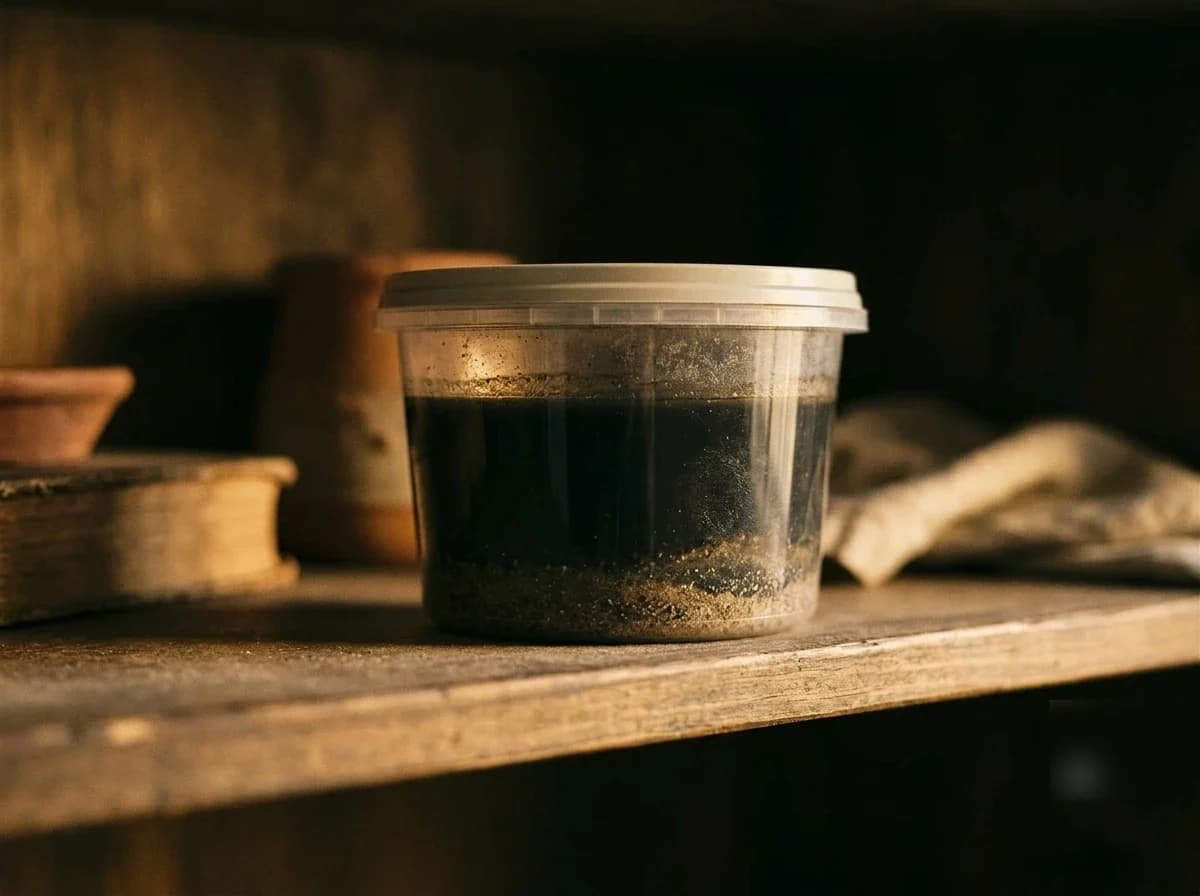
The price of Shilajit online in India starts as low as 300 rupees for 20 grams. That is not a bargain. It is a signal.
Real Shilajit — actually mined at altitude, actually purified through multiple rounds, actually tested for heavy metals and microbes — cannot be sold sustainably at that price. The numbers don't work. So when a jar costs 300 rupees, something has been substituted for something else. This journal is about what that substitution actually is.
The four common substitutions
Cheap Shilajit is not one thing. It is a spectrum. Here are the four categories, in roughly increasing order of dishonesty.
1. Under-purified real Shilajit
The most benign version. Genuine Shilajit resin, harvested from a real source, but processed through only two or three rounds of water purification instead of eight or ten. The savings are real — labour, time, and equipment costs all drop. But the resin retains more of what it should have shed: mineral debris, rock particles, and heavy metals that the source rock happened to contain.
You can eat it. It will not taste dramatically different. But over months, you are consuming a low daily dose of the metal contaminants that a properly purified batch would not carry. The damage is slow, not immediate.
2. Cut with humic acid from cheaper sources
The next step down. Real Shilajit is mixed with humic acid — a related but chemically distinct substance — sourced from cheaper origins like agricultural peat or lignite (a form of soft coal). Humic acid looks similar to Shilajit resin, dissolves similarly in water, tastes similar to a casual palate, and costs a fraction as much per kilogram.
A jar that is 30% Shilajit and 70% cheap humic acid can still be marketed as "pure Shilajit" without making an obviously false claim about the substance being present. What you are paying for is a real Shilajit story wrapped around a mostly-not-Shilajit product.
The lab report is where this shows up. Real Shilajit resin has a fulvic acid content above 70% on the active fraction. A humic-acid-heavy dilution will read much lower. Which is why brands doing this typically don't publish batch-specific lab reports — or they publish carefully worded ones that measure something else.
3. Straight adulteration with lookalike substances
The dishonest end of the spectrum. Some cheap "Shilajit" contains no Shilajit at all. Common substitutes:
- •Charcoal or activated carbon (dark colour, similar visual impression)
- •Molasses mixed with charcoal (sticky, brown-black, dissolves in water)
- •Coal-derived humic substances heavily processed to look resin-like
- •Sometimes plain caramel mixed with mineral powder
These preparations can look, feel, and even taste convincingly like Shilajit to someone who has never had the real thing. They cost the seller maybe ten rupees per jar to produce. They contain none of the fulvic acid, none of the trace minerals in the right proportions, and none of the therapeutic properties tradition has attributed to Shilajit for three thousand years.
If you have never had good Shilajit and you buy one of these first, you might genuinely wonder what the fuss is about. That would be the correct reaction to what you are actually consuming.
4. Powder-and-filler capsules sold as Shilajit
The industrial cousin. Rather than resin, you get capsules containing a powder that is claimed to be dried Shilajit but is often mostly binder, flow agent, and anti-caking material with a small amount of Shilajit powder or humic acid mixed in.
The capsule format itself is not automatically a red flag — a legitimate compressed Shilajit powder can exist. But most cheap-capsule products contain 200 to 300 milligrams of actual Shilajit-like material inside a 500-milligram capsule, and the rest is filler. Which means the daily dose you think you are getting is often less than half of what the label suggests.
How to spot each type
**The under-purified.** A batch-specific lab report catches this. If the fulvic acid content is below 60 percent, or if heavy metals show up close to the regulatory ceiling, you are looking at incomplete purification.
**The humic-acid dilution.** Same test. A properly purified Shilajit reads at 70% or higher fulvic acid on the active fraction. A dilution reads lower. This is why brands cutting their product almost never publish signed, batch-specific lab reports — the numbers tell on them.
**The straight adulteration.** These often will not have any credible lab report at all, or will offer generic PDFs with no lab name, no batch number, and no signature. A brand willing to be transparent about what a specific jar contains is a brand that has something to be transparent about.
**The powder-and-filler capsule.** The label will show a capsule dose of 500 mg or 1000 mg, but ingredients will list excipients — magnesium stearate, silicon dioxide, microcrystalline cellulose. When those show up in significant proportion, the capsule content is not actually the mg on the label.
What "cheap" actually means
If a jar of 20 grams of Shilajit resin costs less than 1,000 rupees direct-to-consumer, something has been cut. It might be the purification. It might be the source altitude. It might be the actual proportion of Shilajit in the jar. It might be the testing.
Expensive is not automatically right either — I have written about that elsewhere. But cheap is almost never right. The honest maths for a 10-gram jar of properly sourced, properly purified, properly tested Shilajit, sold direct-to-consumer without middlemen, sits in the 2,000 to 3,500 rupees range.
Anything much below that, someone somewhere in the chain is cutting a corner that ends up in your jar.