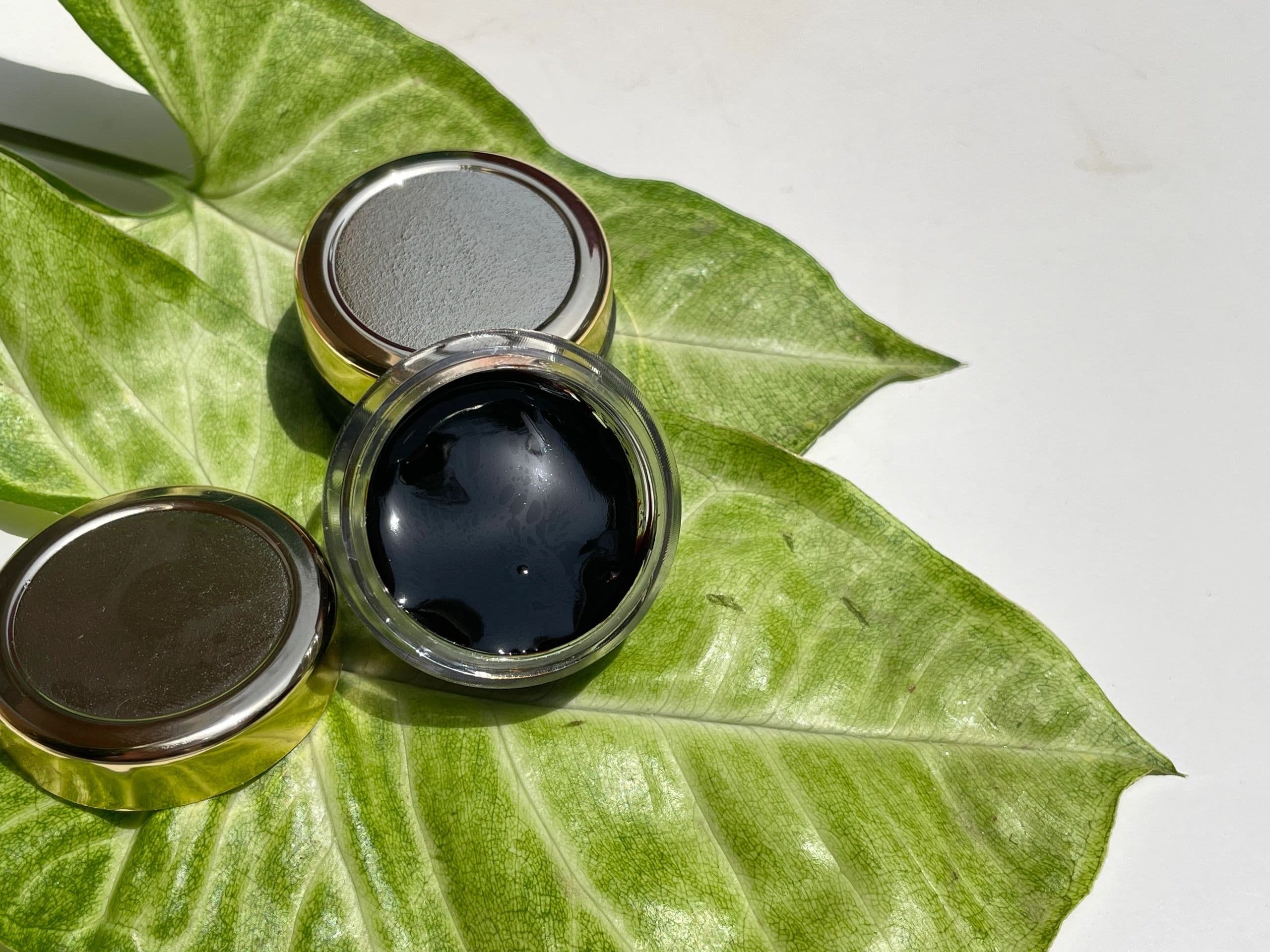
Why we purify Shilajit with water, not Triphala

Every now and then someone who knows Ayurveda writes to ask why we don't use Triphala bhavana — the classical purification method that dissolves Shilajit in Triphala decoction rather than plain water. Sometimes the question comes with a claim: that water-only Shilajit is inferior, or that it "goes bad" faster.
This journal is the honest answer.
The classical case for Triphala
Shodhana is the Ayurvedic term for purification. Bhavana is one of its methods — repeatedly soaking a substance in a herbal decoction. Charaka's most-cited purification for Shilajit was bhavana with Triphala: seven rounds of soaking in a decoction of amalaki, bibhitaki, and haritaki.
Chemistry gives Triphala three legitimate advantages here.
Triphala contains natural antioxidants — gallic acid, ellagic acid, and other polyphenols — that protect the fulvic acid molecule from oxidation during the multi-round soaking process. Water alone is chemically neutral, and fulvic acid can slowly oxidise when it sits in water over days exposed to air.
Triphala is also mildly antimicrobial. Its tannins and phenolic acids fight bacteria and mould during long wet soaks. In water alone, if the processing facility is warm or humid, there is real microbial risk during a slow purification.
The third advantage is different in kind, and it is the one that matters most. Triphala is itself a rasayana with its own therapeutic effects. Bhavana with Triphala infuses the residual Triphala compounds into the final resin. What you end up with is a compound preparation — Shilajit plus a small amount of Triphala baked in.
If that dual effect is what you want, Triphala bhavana is exactly the right method. Classical Ayurvedic pharmacies routinely used it because they were producing specific compound formulations, not neutral Shilajit.
Why we made a different choice
Our purification is water-only. Four reasons.
**Purity of what is on the label.** When our jar says "Shilajit resin, 70+% fulvic acid," we want that to be literally true. A Triphala-purified resin is Shilajit plus Triphala compounds, and the "% fulvic acid" number on such a jar is technically about the whole preparation, which conflates two things.
**Buyer flexibility.** Someone taking our Shilajit for anaemia can pair it with iron. Someone taking it for joints can pair it with Ashwagandha. Someone taking it as a plain rasayana can pair it with nothing. Baking Triphala in at the manufacturing step forecloses those choices.
**Oxidation, managed differently.** We handle the fulvic acid oxidation risk with speed — shorter total time per round — and with cold glacial water, which slows oxidation on its own. We then test finished batches at Eurofins. If the fulvic acid content is above 70 percent, we know the process worked. If it is not, the batch goes back.
**Microbial risk, managed differently.** Cold glacial water is a poor growth medium. Shorter individual soaks limit exposure. Third-party microbial testing at the finished batch confirms it. Same principle as with oxidation — instead of relying on Triphala's antimicrobial properties to protect the process, we verify that the finished product tests clean.
Does water-only actually make Shilajit "go bad"?
Not in the way the claim usually implies. A properly dried water-purified Shilajit is chemically stable in the jar for years. The shelf life of the finished product is essentially the same whether the solvent was water or Triphala. I have written elsewhere about water activity — the number that actually governs storage stability — and the value is low enough in either case to keep nothing biological alive.
Where the concern has real basis is during processing, not after. And that is what modern controlled conditions — temperature, timing, and finished-batch testing — are designed to handle.
Both methods have a place
Triphala bhavana produces a compound formulation — Shilajit tuned with Triphala's own therapeutic direction baked in. That is genuinely useful when you know exactly what condition you are treating for.
Water purification produces neutral Shilajit that a buyer can steer wherever they want. Most of our customers are taking Shilajit as a daily rasayana and pairing it with whatever already fits their routine. For that use, neutral is what serves.
Neither approach is wrong. They are producing two different things, for two different intended uses. Our jar contains what it does because that is what we think most people who buy it are actually looking for.