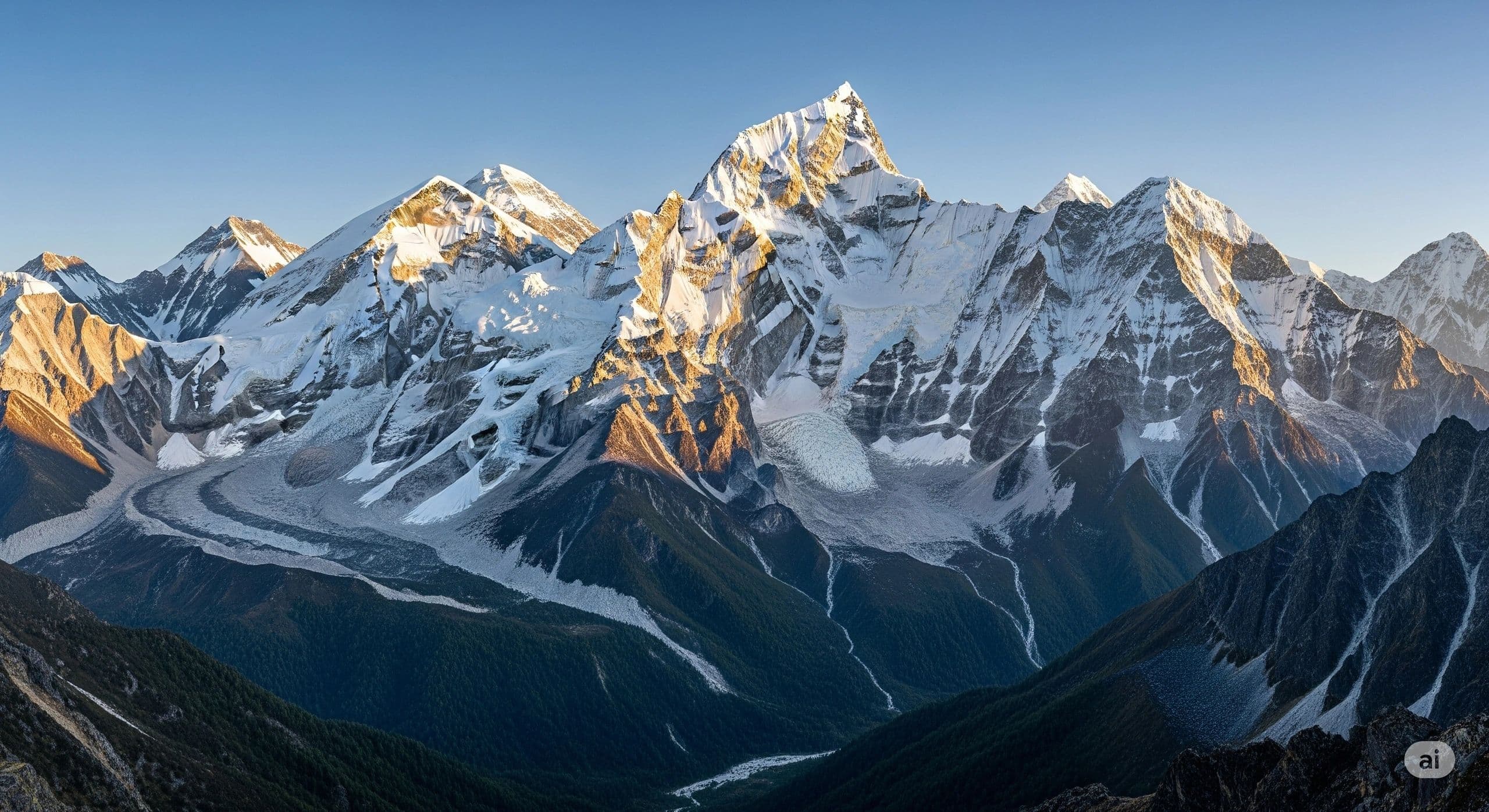
If you have ever driven the road out of Leh toward Khardung La, or the passes further north, you know the air goes strange somewhere around fourteen thousand feet. Chest gets tight. Your body slows down without asking permission. By sixteen thousand, you don't want to be walking around unless you have a good reason.
Our harvesters have a good reason.
What actually happens to rock this high up
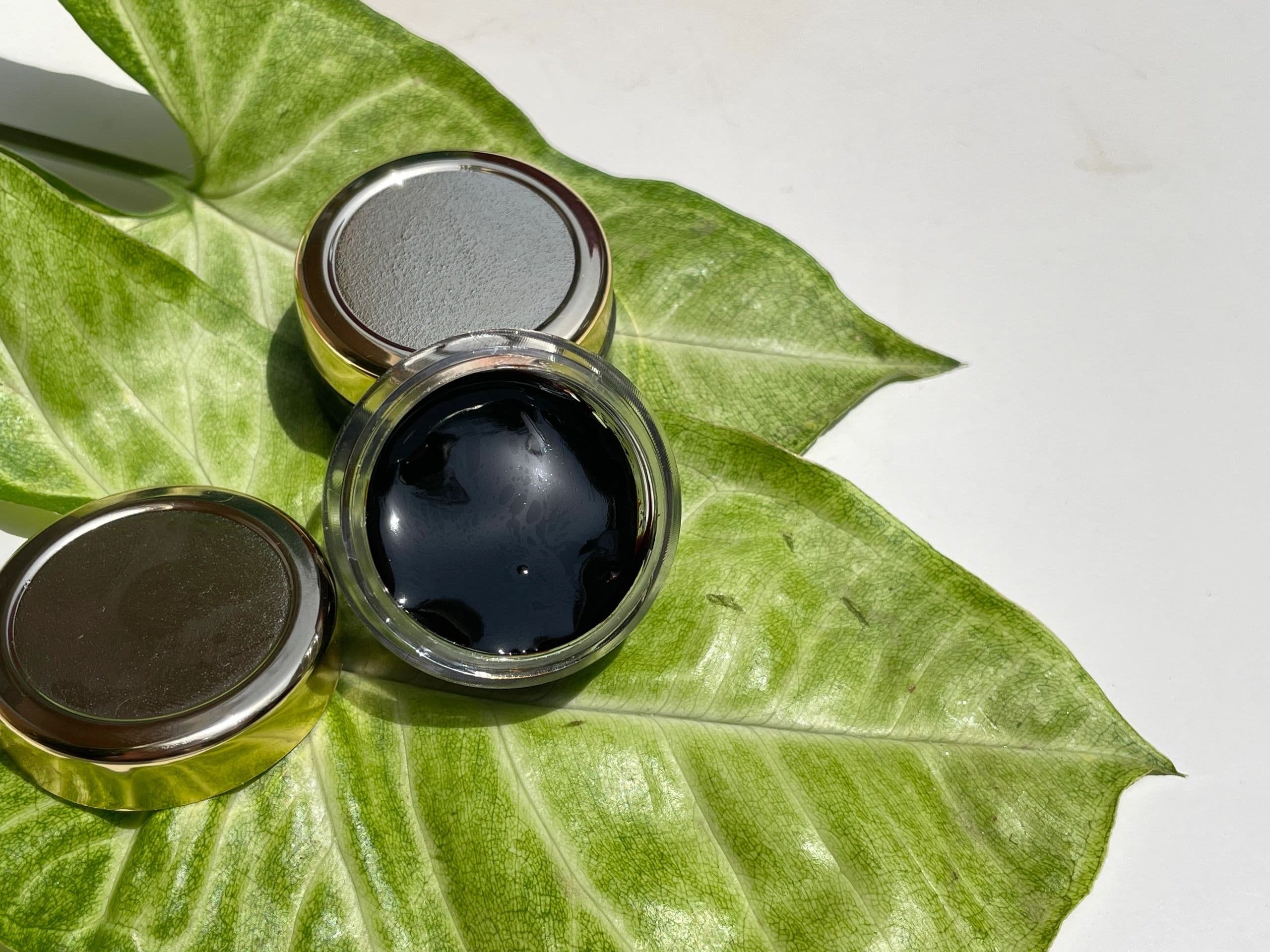
Shilajit forms slowly. Plant and microbial matter gets locked inside Himalayan rock over centuries and, in the process of breaking down, turns into a thick, tar-like resin. When the summer sun softens the rock enough, that resin seeps out through cracks. What comes out is our raw material.
Two things are different at altitude.
One, the source rock is cleaner. Less biological contamination in the environment, less dust, less runoff. What seeps out isn't wearing as much muck.
Two, the process took longer. Cold slows everything down. That gives the resin a higher fulvic acid share — the fraction that actually does anything in the human body — and a smaller share of the material we would have to strip out later.
The higher you go, the better the number gets. That is the whole reason we go up.
Not everyone sources this high
Plenty of the Shilajit sold in India is collected much lower down. The walks are shorter, the yields are bigger, and if the fulvic acid content is thin you can always blend to hit a marketable number. That is how a big part of the industry works. It's not an accusation. It's just what's true.
We haven't gone that route because the number on our jar has to survive an independent lab test. Below fourteen thousand feet, in our experience, it doesn't. Above sixteen thousand, it does — reliably enough that we can print the range on the packaging and stand behind it.
The harvest itself
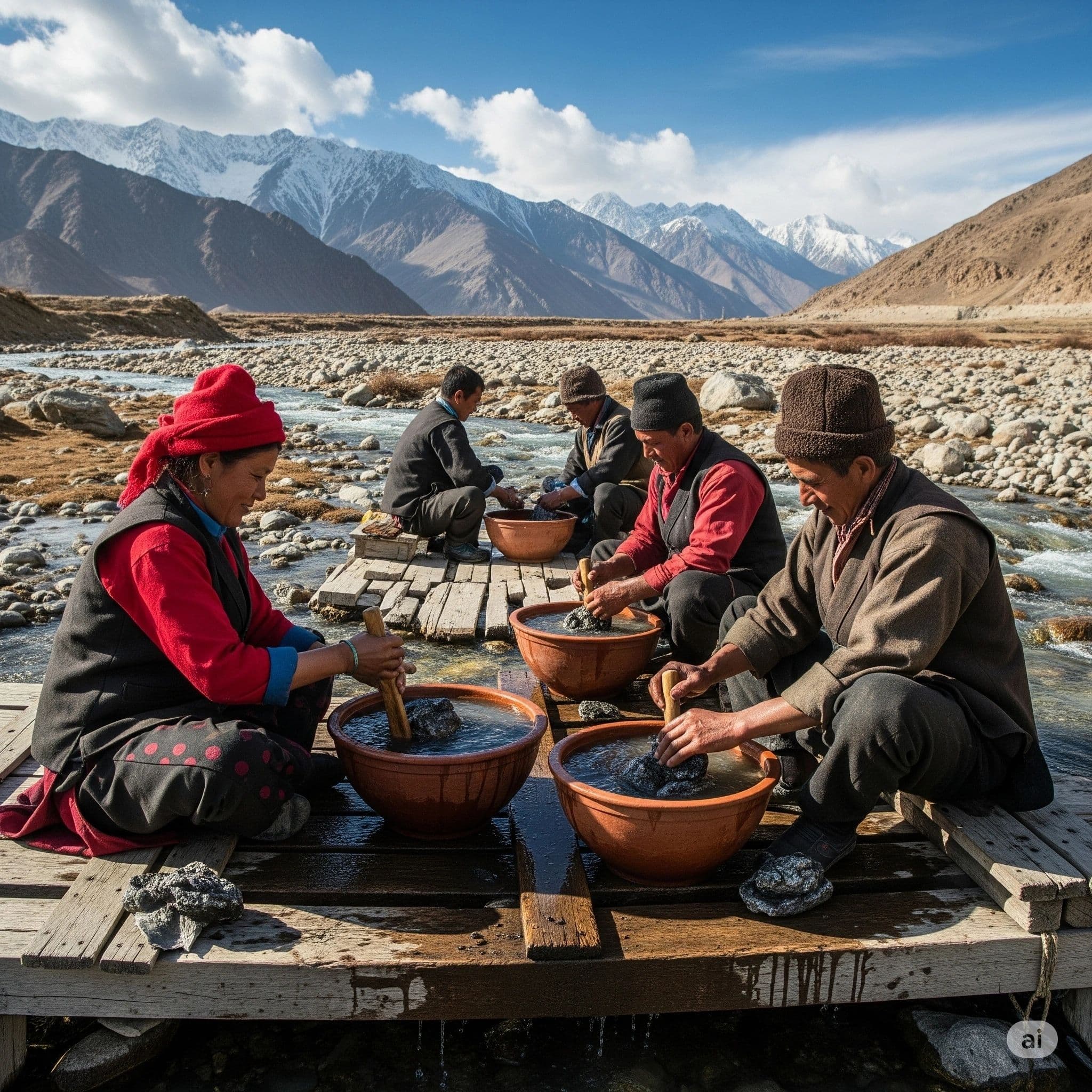
Our harvesters are all Ladakhi. They know these ranges the way you know your own neighbourhood, and they go out during a short window between May and September, when the resin is flowing and the paths are still passable.
They bring the resin down in wicker baskets, the way people have moved goods up here for as long as anyone can remember. The process is slow. We haven't tried to make it faster.
What the "16,000+ ft" on our label is doing
It isn't romance, and it isn't a marketing flourish. It is the reason our lab report reads the way it does. Everything downstream — the purification, the fulvic acid percentage, the fact that you can eat the resin without wondering what else came along for the ride — starts up there, at the top of the mountain, in a basket carried down by someone from Leh.